Boer Fibre — wet-process made
Since 2006, Boer has focused on asbestos-free man-made mineral fibres made by the proprietary wet process. "Boer Fibre, wet-process made" is not a slogan — it is a complete technical route from raw material to finished fibre: natural-rock feed, wet purification and targeted surface treatment, giving fibres that are easy to disperse, high-temperature stable and low in shot.
Three capabilities, tied to process and QC
Stability
The ISO9001 quality system keeps product quality stable, with full control from raw materials and process to factory test reports.
Low shot content
The proprietary wet process separates shot from fibre; models such as BE-SL05 reach shot content as low as <1% (>125μm sieve), per the batch test report.
Surface treatment
Targeted surface treatment by spray and immersion raises fibre surface activity, improves specific surface area, and optimises dispersion and interfacial bonding in formulations.
Wet-process manufacturing flow
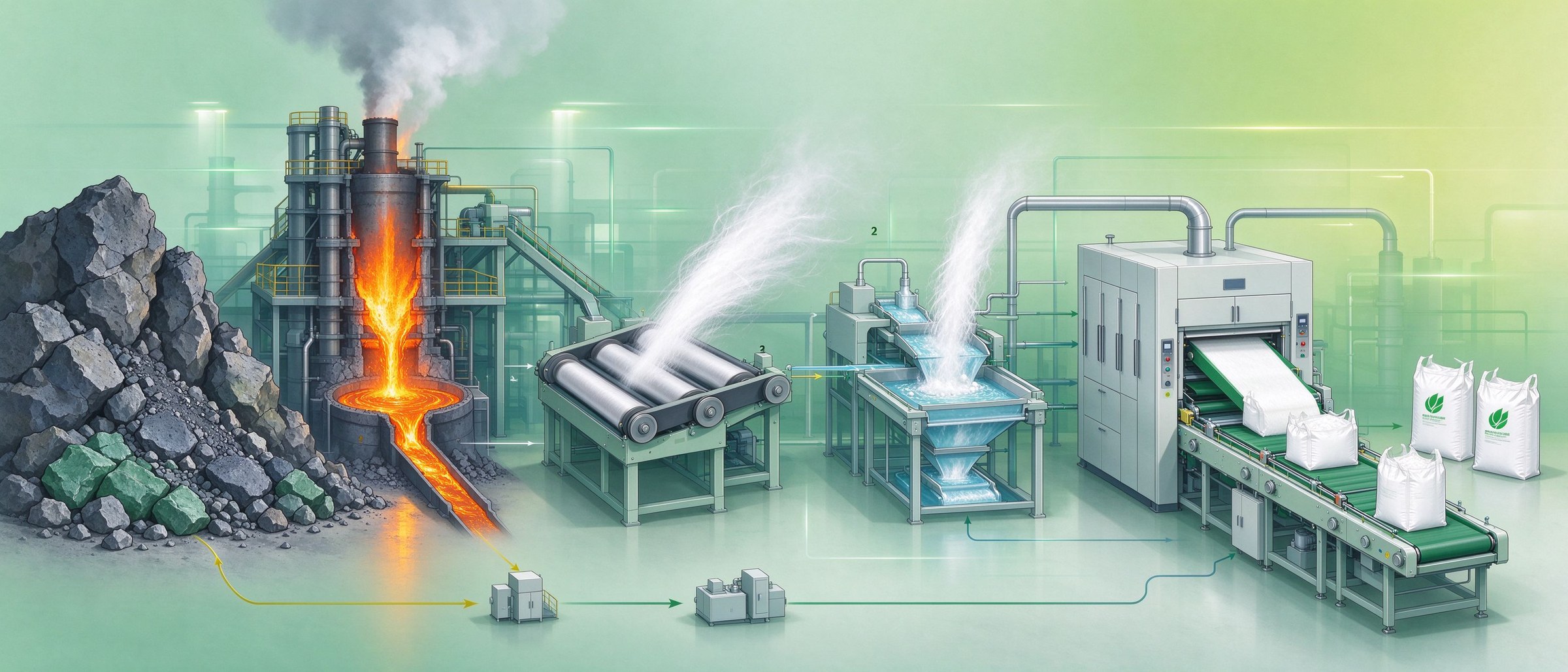
Natural rocks such as diabase and basalt are melted at high temperature in a cupola furnace, fibreised by a four-roll centrifugal spinner, collected by settling, wet-purified (de-shotting, length setting, thickening), surface-treated, dried, opened, weighed and packed into storage.
Raw materials
Natural rocks such as diabase and basalt are weighed and charged into the cupola furnace.
Melting
High-temperature melting in the cupola furnace (with heat-exchanger blast supply, waste-gas incineration and circulating cooling water).
Fibreising
The melt flows through the launder to the four-roll centrifugal spinner (oil-mist lubrication).
Collection
Fibre enters the settling chamber (hot-blast stove supplies high-pressure air and hot-air circulation; sizing agent is fed via metering pumps and nozzles), and is conveyed by exhaust fans to the hub collector for pendulum conveying, collection and storage.
Wet purification
Via dispersion and opening equipment into the No.3 purification line: dispersion / opening, de-shotting, length-setting device and thickener; the sizing agent is fed through a modified metering device, impurity separator and thickener.
Drying
Drying in stationary and conveyor drying ovens (heated by the hot-blast stove).
Finished fibre
After drying, the fibre passes through an opening device and weighing unit into the packaging workshop; finished goods go into storage.
In-house testing
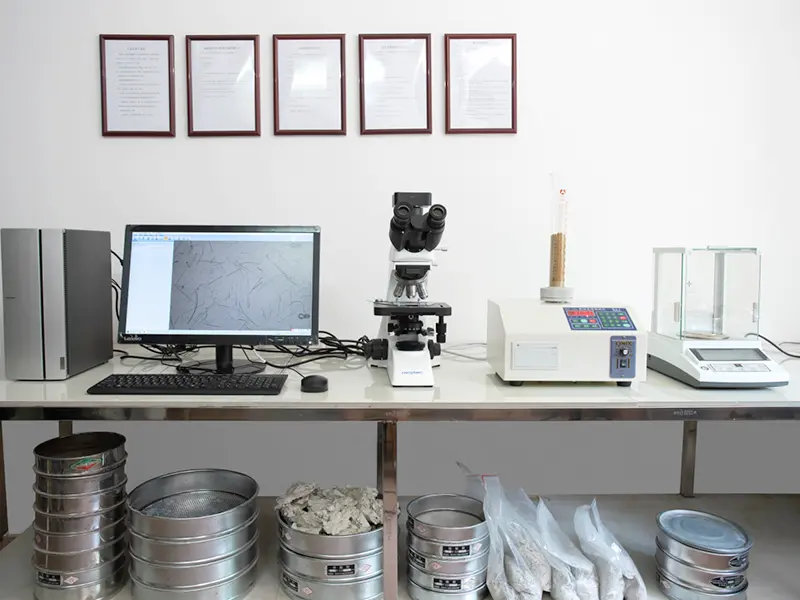
Equipped with L/D ratio testers, chemical composition analysers and other devices for in-process control of L/D ratio, shot content, moisture and chemical composition.
Third-party testing
X-ray diffraction asbestos testing passed at the National Non-metallic Minerals Products Quality Supervision and Inspection Center, Shanghai Institute of Ceramics of the Chinese Academy of Sciences, PONY Testing, CTI and SGS, plus SGS SVHC and RoHS testing.
Safety data
Products carry the MSDS (EU-general version) and SDS safety data sheet (2026 edition compiled per REACH Annex II 2020/878), delivered with each shipment.
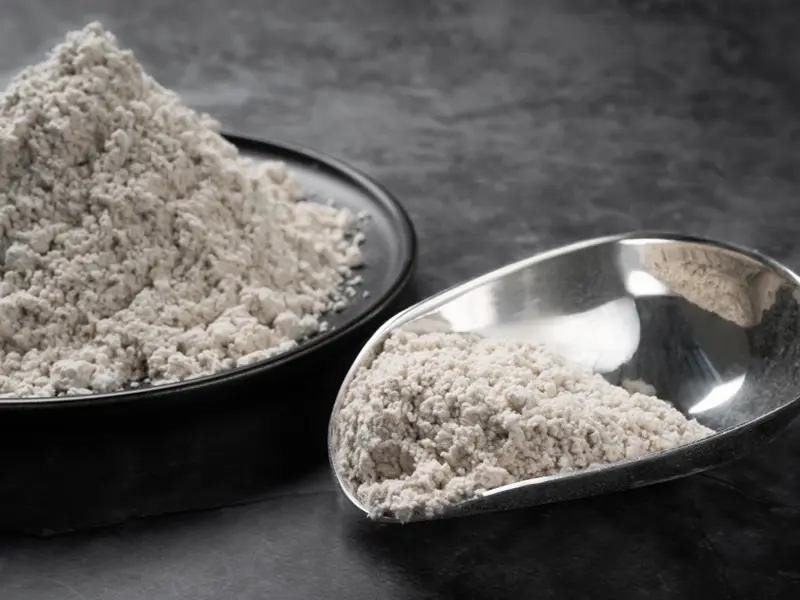
Lab and samples, with test reports
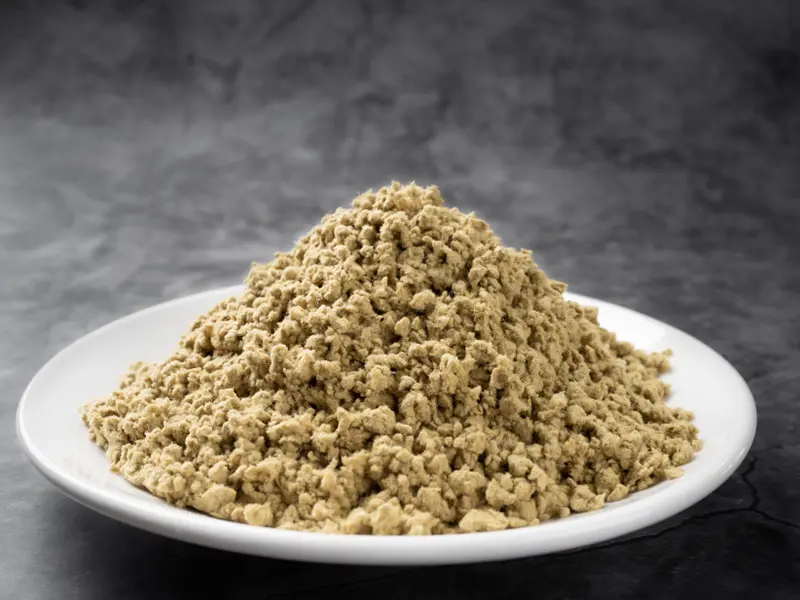
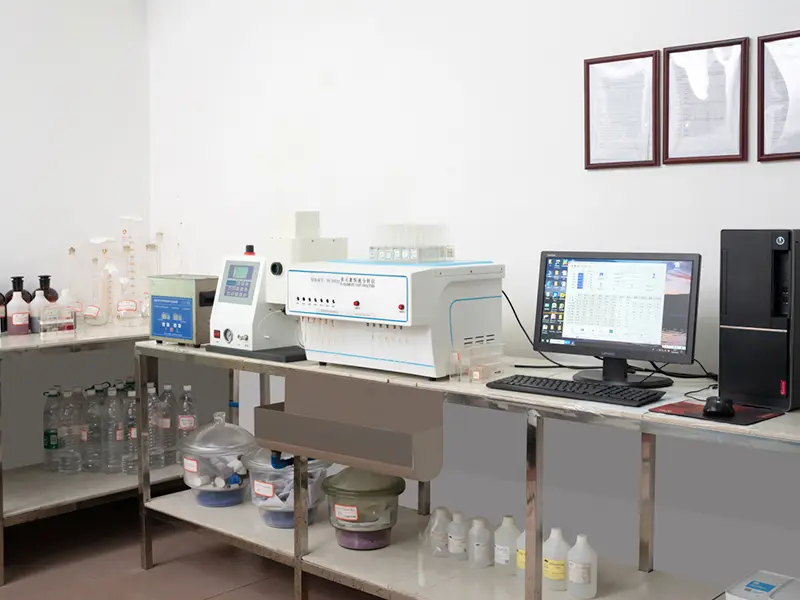
Evidence chain (verifiable)
- ISO 9001:2015 quality management system certification · registration 0350325Q30014R2S (valid until 2028-01-05)
- SGS asbestos-free report CANEC25025290506 (2025-10-22, all 6 asbestos types not detected)
- SGS RoHS report CANEC25025290502 · SGS SVHC report CANEC25025290504 (250 substances ≤0.1%)
- SDS safety data sheet EECSSDS2605060802 (2026-05-13)
- See the Certifications page; original reports are available on request
10 things you may want to know about the wet process
Q1What is the mineral fibre wet process?
Q2What is the difference between the wet process and the dry process?
Q3What is the principle of shot separation?
Q4What role does the L/D ratio play?
Q5What are the melting point and heat resistance of the fibres?
Q6How does Boer test for asbestos?
Q7Do the products meet EU compliance requirements?
Q8Can test reports and technical documentation be provided?
Q9How do I choose the right fibre by process?
Q10How do I contact the Boer technical team?
Want fibre selection and formulation support?
The Boer technical team provides selection advice and formulation tuning support — contact us.